Along the waterfront of the wild, and windy Kaikōura coastline sits the once-bustling Wakatu Quay. Once home to commercial fishing buildings, the quay has long been a place shaped by marine industry, identity, and a community with a strong connection to the land & sea. This unique ex-functioning quay is surrounded by a tapestry of natural beauty and iconic wildlife against a backdrop of mountain ranges spreading as far as the eye can see. Disaster struck in 2016 when a catastrophic earthquake ripped through the region, fracturing the community and cutting off physical access to the area. This devestating disruption to the flow of tourism that the regions economy so heavily relies upon is still being felt almost 10 years later. However, there is new hope on the horizon spearheaded by the Kaikōura District Council and the Kaikōura Marine Development Programme in conjunction with local iwi and kaitiaki. In a purposefully bold vision, the precinct is now being reimagined as a vibrant waterfront destination - a modern landmark that celebrates Kaikōura’s heritage whilst providing a modern opening of new possibilities for tourism, education and local economic growth.
At the heart of this transformation to create a mixed-use precinct for both locals and visitors alike, sits a new single-storey commercial building: a hospitality venue designed to draw people back to the waterfront and serve as a literal anchor the wider redevelopment. For this project, Oculus provided Building Enclosure Design (PS1) and Construction Monitoring (PS4), guiding the project team toward a durable, high-performing solution tailored to one of the harshest marine environments in Aotearoa re-connecting people to the mauri of Kaikōura.
At a Glance
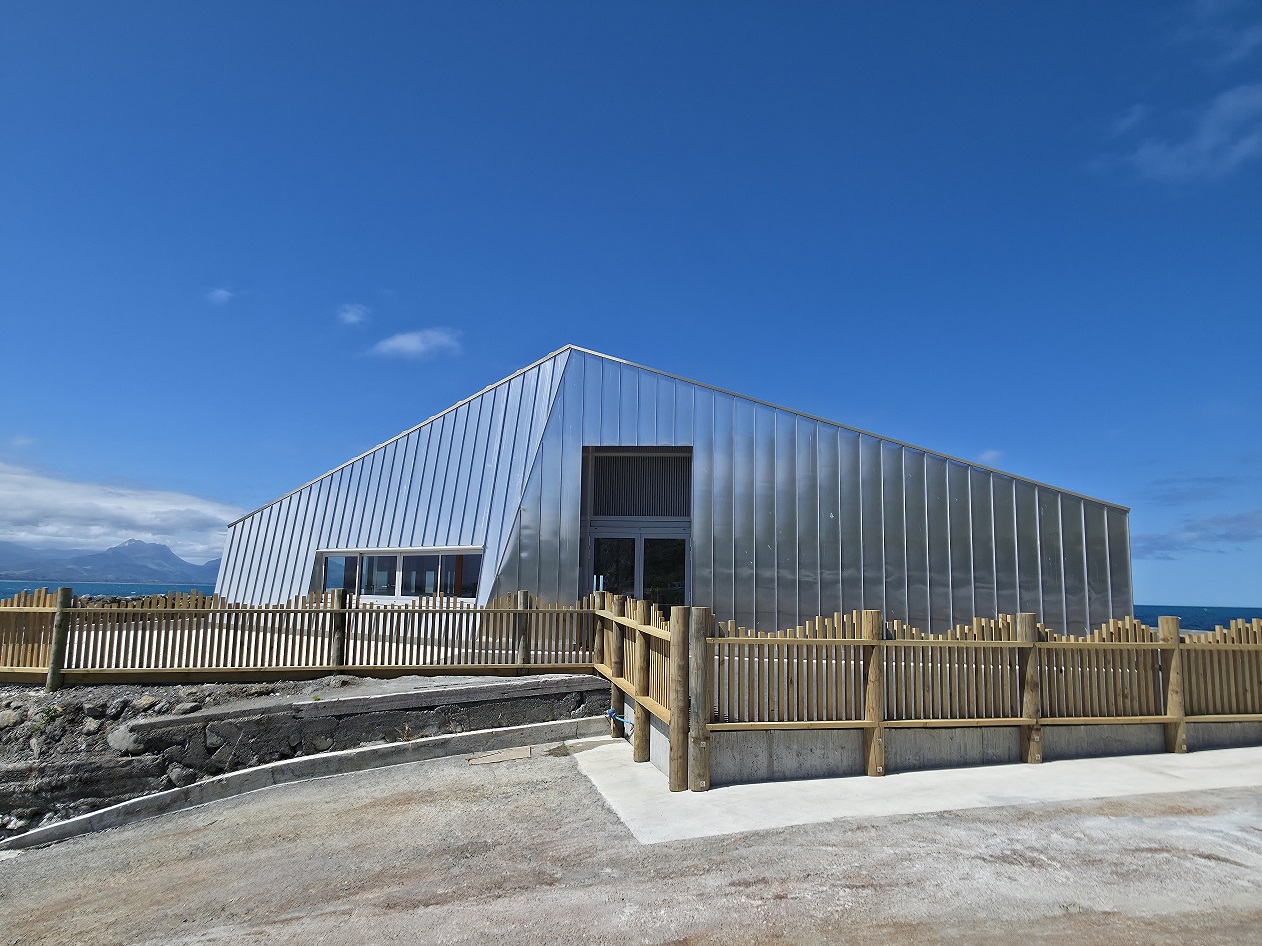
A boat-hull inspired hospitality venue in Kaikōura, featuring a resilient facade designed by Oculus to withstand extreme marine conditions.
Address: Wakatu Quay
Type of project: Commercial hospitality (restaurant)
Status of project: Completed November 2025
Project value: ~ $1.68M (base build estimate)
Client: Kaikōura Marine Development Programme & Kaikōura District Council
Architect: Warren and Mahoney
Oculus reps:
- Dimas Rodriguez | dimas@obsf.co
- Margaret Amankrah | margaret@obsf.co
The Vision and Our Role
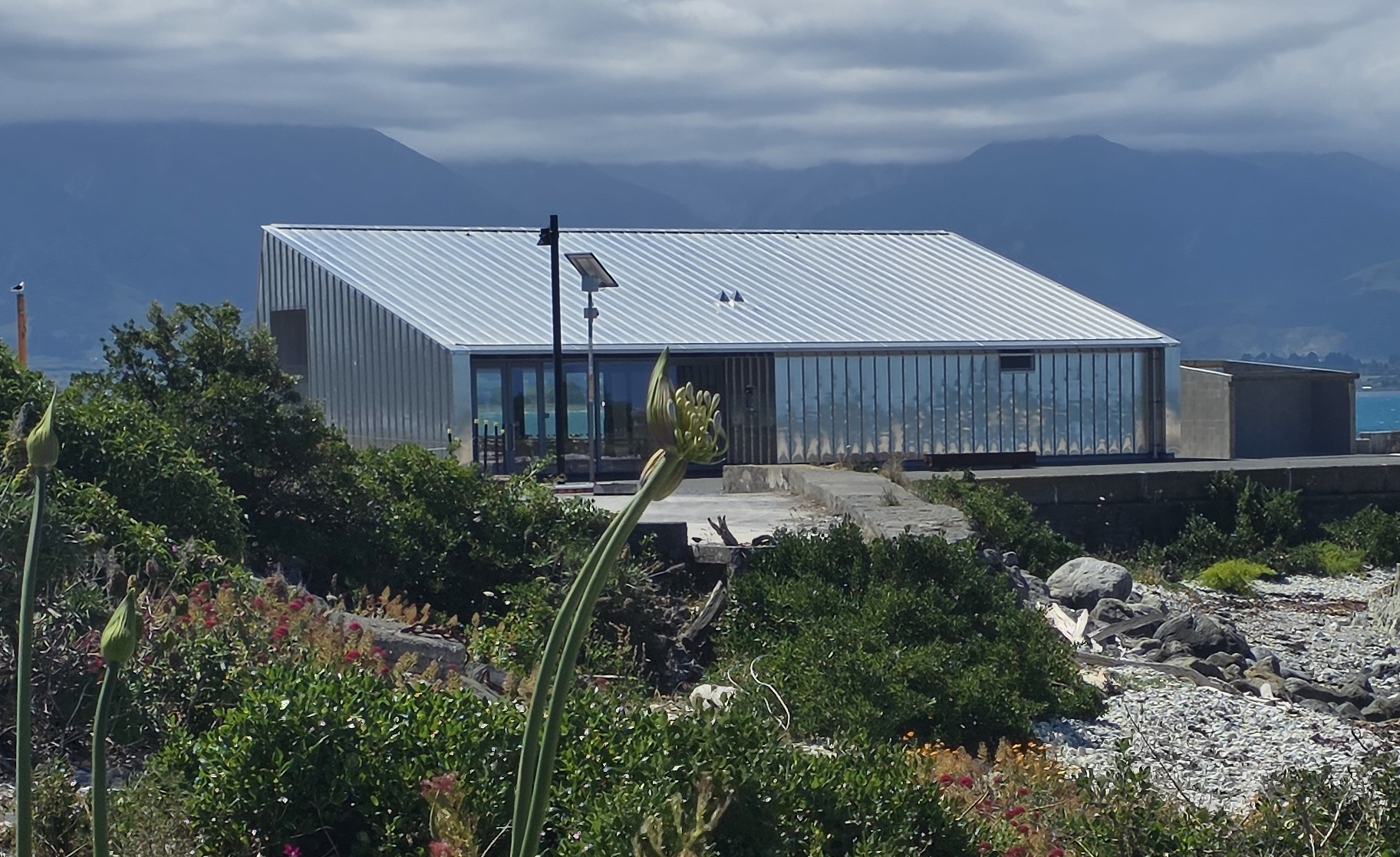
The building’s design draws deeply from its surroundings - the story of the site, the legacy of the fishing industry, and the dramatic presence of the Kaikōura Alps. The form intentionally mimics the underside of a boat hull, creating a sculptural, faceted aesthetic that pays homage to the working wharf while giving the precinct a striking new identity.
In an environment this exposed, beauty alone isn’t enough. Salt-laden winds, constant moisture, and UV exposure all demand a level of detailing and durability well beyond standard commercial construction. That’s where our team stepped in.
Oculus worked hand-in-hand with the architect and cladding manufacturer to ensure the vision remained both achievable and enduring. We collaborated closely on minimalist detailing and assemblies that delivered the perfect balance of cost-efficiency, constructability, and long-term performance.
We also provided early-stage guidance to help harmonise the structural and enclosure strategies, ensuring that the building’s dramatic form could be executed cleanly without compromising weather performance.
Results and Achievements
In one of Aotearoa’s toughest marine environments, this project shows how a pared-back architectural concept can deliver exceptional performance when supported by rigorous enclosure design. Each element - from its geometry to its moisture-management strategy - was meticulously developed to protect the building without compromising its sculptural intent.
Key outcomes include:
- A distinctive, faceted architectural form that holds its clarity from every vantage point. The building’s hull-inspired geometry feels both sculptural and grounded, delivering an identity that is elegant, precise, and deeply connected to the history of the site.
- A seamlessly integrated warm roof with concealed gutters, enabling the clean silhouette essential to the “boat hull” concept. This roof not only enhances thermal performance but also achieves a level of visual restraint that supports the overall design narrative.
- Thermally isolated structural steel throughout, reducing the risk of corrosion and supporting long-term durability in a high-salt, high-moisture environment. By isolating thermal bridges, we strengthened both energy performance and material longevity.
- A comprehensive vapour-control strategy, including a full internal vapour-control layer that mitigates moisture migration and reduces the risk of interstitial condensation - a critical safeguard in buildings exposed to variable coastal conditions.
- A cladding system that unites minimalist aesthetics with exceptional durability, combining robust material selection with folded, refined junctions. This approach ensures the envelope maintains its crisp, architectural expression while performing reliably under constant marine exposure.
Together, these achievements reflect a building where form and performance operate in harmony - proving that simplicity, when backed by strong building-science insight, can create enduring impact.
Teamwork in Action
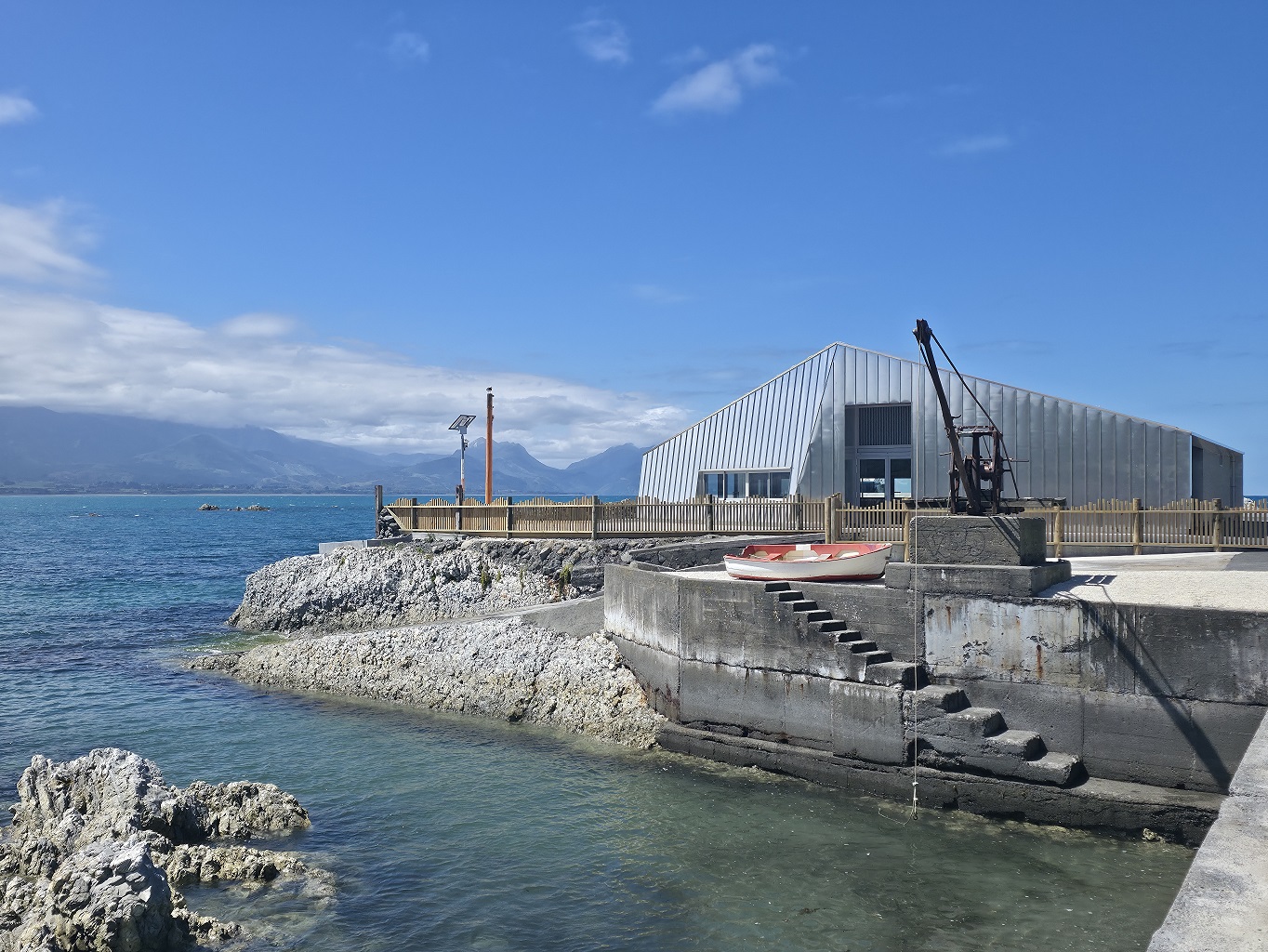
The Wakatu Quay hospitality building is a powerful example of how collaborative problem-solving can elevate a project from simply functional to truly exceptional. As the project’s building-science coach, our role was to bring clarity to complexity - helping the team navigate the demands of an unforgiving marine environment while honouring a bold architectural concept. By working closely with the architect, engineers, suppliers, and contractor from the earliest stages, we were able to anticipate challenges long before they reached site and establish a clear technical pathway that supported both performance and design intent.
Key contributions included:
- Designing for extreme marine exposure by developing a robust uncoated cladding solution - one that aligned seamlessly with the architectural vision without compromising long-term durability in this high-salt, high-wind environment.
- Engineering the steel brackets for the hidden gutter system, enabling the clean, uninterrupted roofline essential to the boat-hull form while ensuring the system remained resilient and easy to maintain.
- Refining junction details for the faceted cladding, where every fold and seam mattered. To maintain the purity of the hull-like aesthetic, we designed junctions to be folded and minimal rather than over-flashed, all while delivering above-standard weather protection.
- Collaborating early and often to resolve constructability concerns well before they could impact the programme - giving the contractor full confidence to execute the detailing with accuracy and efficiency.
Through this shared effort, the team delivered a building where design ambition and technical performance reinforce each other - proof that with the right collaboration, even the most demanding environments can become opportunities for innovation.
Project Partners
Projects of this complexity don’t succeed by chance - they succeed because every partner shows up with skill, intent, and a shared commitment to excellence. Wakatu Quay is a testament to what happens when an entire team leans into a bold idea and sees it through together.
We’d like to acknowledge Warren and Mahoney, whose ambitious vision set the tone for the project, confidently blending cultural narrative with contemporary form. LMC Building and Construction brought that vision into the real world through precise, detail-driven craftsmanship - navigating complex geometry and tight tolerances with care. TARC took on the intricacies of the cladding system, embracing the challenge of folded, minimalist junctions and delivering with exceptional skill and consistency. And to all our engineering partners invovled, whose technical expertise underpinned every critical decision, thank you - your insight was essential in achieving a building that performs as well as it looks.
Together, this team turned a demanding site and an ambitious concept into a coastal landmark built to endure.
Projects like this only succeed when everyone brings their best - and Wakatu Quay is no exception.
Project Manager: Inovo
Architect: Warren and Mahoney
Engineers: Ruamoko Solutions, E Cubed, Crossfire
Construction: LMC Building and Construction
Supplier / Installer: TARC, Starke, Pro Clima, STO, Equitone
Working on a building project exposed to harsh environmental factors and need help with high-performance solutions?
Let’s build something that doesn’t just meet expectations - but elevates them.
Get in touch with us at info@obsf.co or contact the team directly to start the conversation.