In lesson 5, we focus on one of the most common yet serious issues in New Zealand homes: black mould. This article explores what black mould is, why it develops in residential buildings, the health risks it poses, and how proper temperature and moisture management can prevent it effectively and permanently.
What is Stachybotrys Chartarum (Toxic Black Mould)?
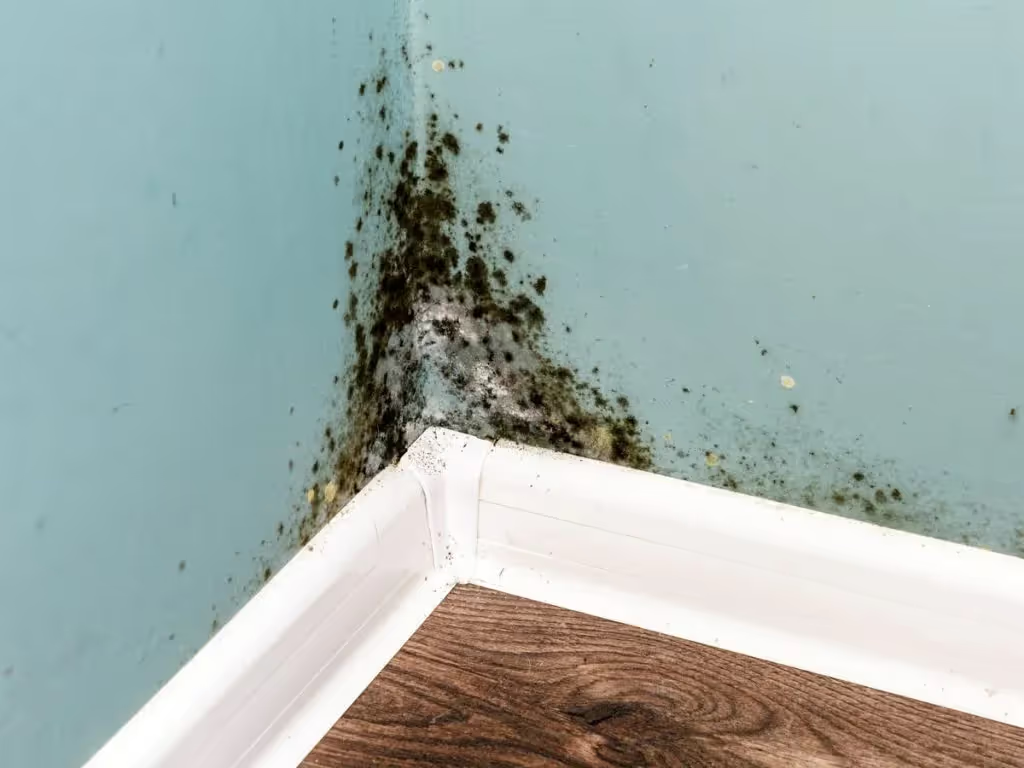
Black mould, scientifically known as Stachybotrys chartarum, is a toxic micro-fungus that spreads through airborne spores. While mould can exist naturally in soil and grain, it is most problematic when it grows inside homes and buildings. From a distance it appears as dark staining, but up close it often has a complex, almost patterned texture.
Without proper treatment, mould does not stay contained. Its spores spread invisibly through the air, allowing it to grow larger and establish itself in hidden areas such as wall cavities, ceilings, and roof spaces.
The 3 Main Conditions Required for Mould Growth
Mould needs three specific conditions to thrive in your home:
- Warmth: An ambient temperature between 18–30°C
- Moisture: High humidity or condensation on surfaces
- Food Source: Organic materials such as drywall paper, timber, wallpaper, or household dust
If you eliminate any one of these conditions, mould cannot grow.
Condensation vs. Heating: What Really Causes Mould?
Condensation is a major contributor to mould growth in New Zealand homes, particularly during colder months. While reducing condensation helps, it is not the sole cause of black mould.
The primary issue is inconsistent heating patterns. Many homes are heated, allowed to cool, and then reheated daily. When indoor surfaces cool down, moisture in the air condenses on walls, windows, and ceilings. When the home is reheated, those damp surfaces warm up creating the perfect environment for mould to grow.
This repeated heating-cooling cycle feeds mould with both warmth and moisture. When the house cools again, mould growth slows, but the moisture remains and softens the materials mould feeds on. Once reheated, growth resumes.
To better understand how mould and mould risk are identified, read our article explaining the different mould testing methods, including air fungal testing, moisture meters, and indoor air quality monitoring.
How to Prevent Mould: Managing Temperature & Moisture
The key to preventing mould is consistency. Maintaining a stable indoor environment removes the conditions mould needs to survive.
- Keep your home at a consistent temperature throughout the day
- Avoid letting indoor surfaces cool down excessively
- Reduce moisture through proper ventilation
- Treat the cause, not just the visible mould
If mould never forms, there are no spores to spread.
How to Identify Black Mould on Surfaces
Black mould often appears as dark blue, green, or black staining on walls, ceilings, or window frames. It may look flat or have a fuzzy, textured surface.
While daily cleaning with vinegar is commonly recommended, this only treats the symptom, not the underlying problem. By the time mould is visible, it has often been present for some time and may already exist behind walls or in roof cavities.
Mould in Rental Properties: NZ Healthy Homes Standards
There is no safe level of black mould inside a home.
In countries such as Canada, visible black mould can be grounds for tenants to break a lease or require landlords to undertake full remediation, including removing wall linings and finishes.
In New Zealand, landlords are legally required to provide homes that meet the Healthy Homes Standards, including adequate heating and ventilation. For authoritative guidance, refer to Tenancy Services and the New Zealand Ministry of Health, which outline tenant rights and health risks associated with damp and mouldy housing.
Surface cleaning alone is not a permanent solution; mould roots can remain embedded in porous materials, allowing regrowth even after cleaning.
The Ideal Indoor Humidity Level (40–60%)
To properly control mould, aim for:
- Indoor temperature: 22–23°C
- Relative humidity: 40–60%
Ensure that extractor fans in bathrooms, kitchens, and laundries are functioning correctly. These should remain on for 30–60 minutes after showering, cooking, or drying clothes.
If your home does not have mechanical ventilation, opening windows daily can help, but it is far less effective than removing moisture mechanically. Installing an exhaust fan is one of the most effective long-term solutions.
What Is Relative Humidity?
Relative humidity (RH) measures how much moisture the air holds compared to how much it can hold at a given temperature. Warmer air can hold more moisture than cooler air.
For example, air at 22°C and 50% RH if cooled to 18°C without removing moisture will have a higher RH. At 100% humidity, moisture becomes visible as fog, clouds, or liquid water.
Frequently Asked Questions About Mould
Can I just paint over mould?
No. Painting over mould does not kill it. The fungus will continue to grow beneath the paint and eventually reappear. The mould must be removed and the surface treated first.
Does vinegar kill black mould?
Vinegar can kill surface mould on non-porous surfaces, but it often fails to reach the roots in porous materials like drywall or timber.
Is black mould dangerous?
Yes. Stachybotrys chartarum produces mycotoxins that can cause respiratory problems, particularly in children, people with asthma, and those with allergies.